About OLIVEION
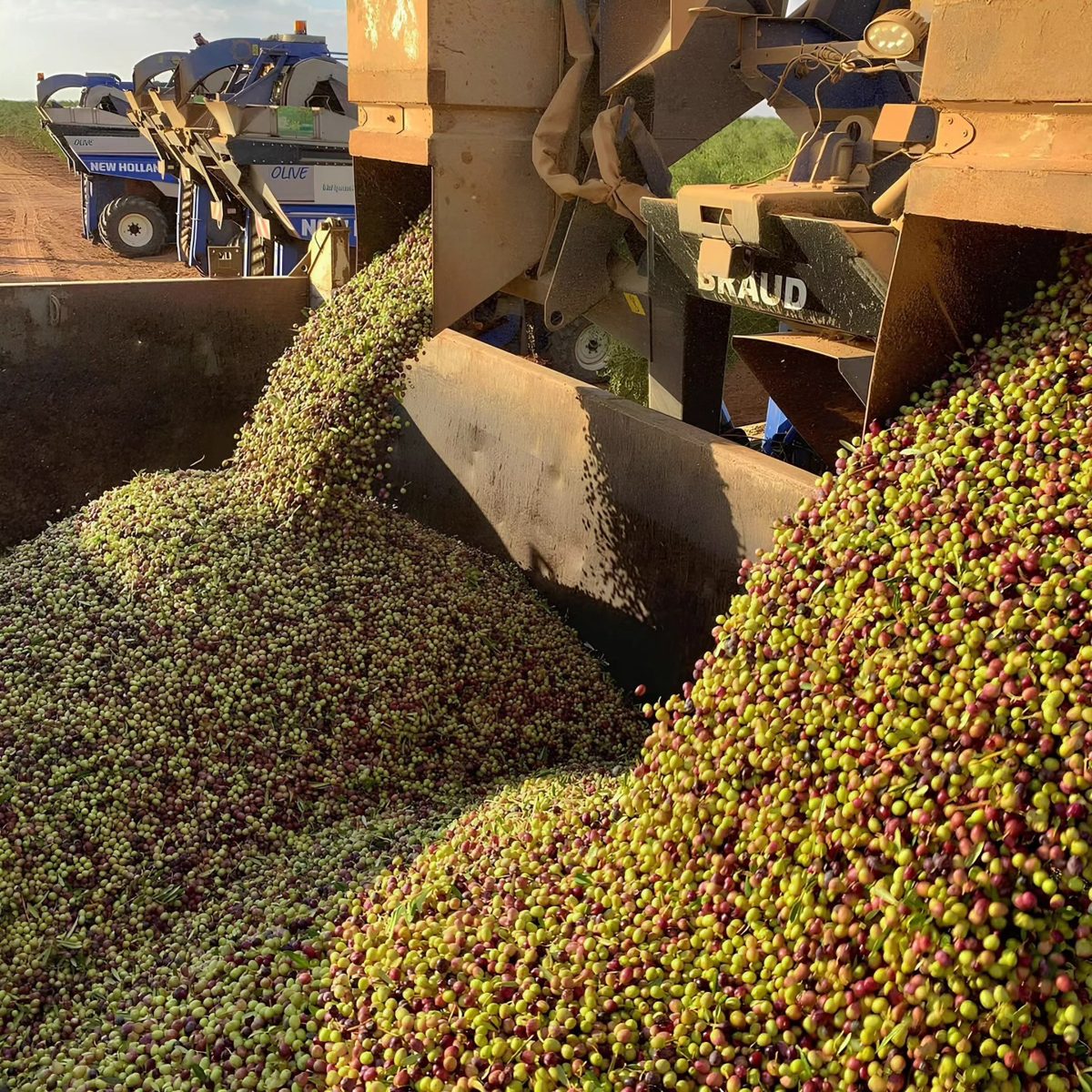
Most battery materials are anonymous — a powder with no story behind it. Ours begins in a specific landscape: the olive groves of Saudi Arabia.
The starting point
Saudi Arabia is home to one of the largest olive plantations in the world. Every harvest, pressing olives for oil leaves behind millions of hard, dense seeds — a by-product with little high-value use today.
That density is the point. A dense, lignin-rich seed is an excellent precursor for hard carbon: it carbonizes into a disordered, non-graphitizing structure — exactly the kind of carbon a sodium-ion anode needs.
The science
Graphite works for lithium but stores sodium poorly. Sodium-ion cells need hard carbon — a disordered carbon with wide interlayer spacing and nanopores where sodium can sit.
Short, curved carbon layers stacked like a house of cards leave room for Na⁺ to insert and cluster.
Larger spacing than graphite accommodates the bigger sodium ion without breaking the structure.
A plant precursor naturally forms a hard, non-graphitizing carbon — and avoids petroleum coke.
Temperature and atmosphere are tuned to set capacity, efficiency and surface area.
The circular case
OLIVEION sits between two industries that don't usually meet: regional agriculture and advanced battery manufacturing. We take a low-value waste stream from one and turn it into a high-value input for the other.
The result is a shorter, more local supply chain for a strategic material — and a lower-carbon route to the anode than fossil-derived alternatives.
What we're building
The material comes out of dedicated battery-materials research, with a provisional patent filed on the process.
A homegrown contribution to the Kingdom's energy-storage and localization ambitions.
We share representative figures now and replace them with measured, reproducible data as we scale.
Cell makers, researchers, and partners across the olive supply chain — we'd like to hear from you.
Get in touch →